While you're enjoying a holiday weekend, someone else may be working.
Not a customer, not an employee, not even a competitor.
A cybercriminal.
They know exactly when many businesses are least prepared to respond.
They understand that offices are empty, decision-makers are unavailable, and security alerts may sit unnoticed for hours—or even days.
For organizations across Aurora, Naperville, Joliet, Elgin, and surrounding communities, this creates a challenge many business owners don't think about until after an incident occurs.
The business may be closed.
The threat landscape never is.
Why Holidays Create Opportunity for Cybercriminals
Most cyberattacks don't happen by accident.
They happen because attackers recognize patterns.
Long weekends, holidays, and vacation periods create ideal conditions for malicious activity.
During these periods:
- Offices operate with reduced staffing
- Key personnel are unavailable
- Security alerts receive delayed responses
- Vendor support may be limited
- Employees are focused on personal plans rather than security
Cybercriminals know this.
They also know that every hour an attack goes unnoticed increases the likelihood of success.
Whether the goal is ransomware, credential theft, unauthorized access, or data exfiltration, attackers benefit when no one is actively watching.
The Risk Starts Before the Weekend Begins
Many business owners assume the vulnerability begins once employees leave the office.
In reality, the risk often starts days earlier.
As a holiday approaches, employees naturally focus on wrapping up projects and preparing for time away.
This creates opportunities for shortcuts.
Examples include:
- Sharing credentials for convenience
- Delaying software updates
- Leaving systems logged in
- Granting temporary access without documentation
- Postponing security reviews until after the holiday
None of these actions feel particularly risky.
In fact, they often seem practical.
However, collectively they create conditions that attackers can exploit.
The problem isn't negligence.
It's distraction.
When employees are focused on leaving, security frequently becomes a secondary priority.
The Difference Between Reactive and Proactive Security
Many small and midsized businesses still rely on a reactive cybersecurity model.
If something breaks, someone makes a call.
Or if a user reports suspicious activity, IT investigates.
If a ransomware attack occurs, the response begins.
The challenge is obvious.
You can't report a problem you don't know exists.
A reactive approach depends on discovery.
Cybercriminals depend on delays.
The longer an attack remains undetected, the more damage it can cause.
That's why modern cybersecurity increasingly focuses on proactive monitoring rather than simply responding after the fact.
What 24/7 Cybersecurity Monitoring Actually Means
Many business owners hear the phrase "24/7 monitoring" and imagine a room full of analysts staring at screens around the clock.
The reality is far more sophisticated.
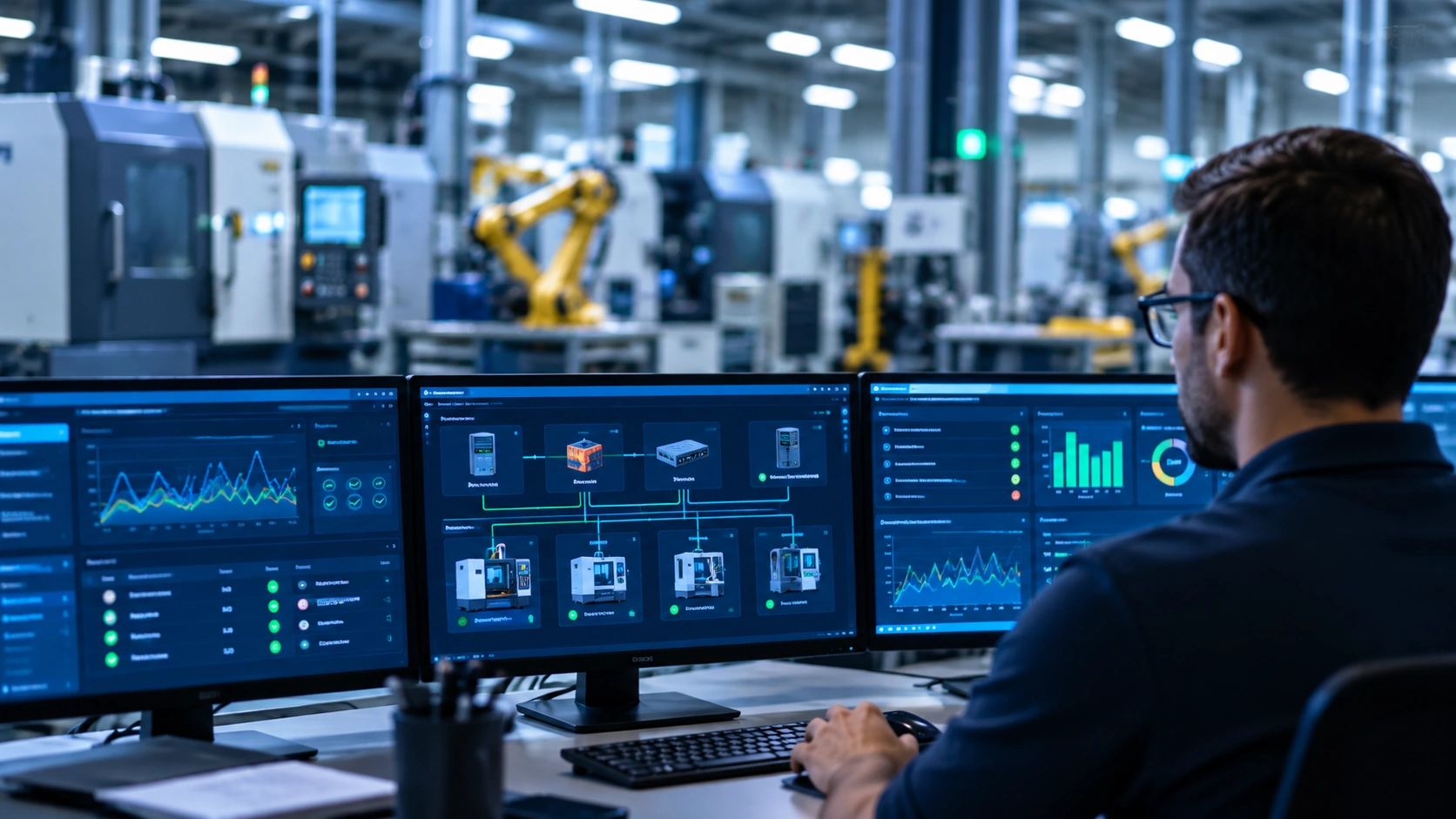
Effective cybersecurity monitoring combines technology, automation, and expert oversight to identify unusual activity as it occurs.
Examples include:
Suspicious Login Activity
Monitoring systems can detect:
- Login attempts from unfamiliar locations
- Repeated authentication failures
- Impossible travel events
- Unauthorized access attempts
Unusual Network Behavior
Security tools can identify:
- Unexpected file transfers
- Data movement patterns
- Communication with known malicious domains
- Abnormal device activity
Endpoint Threat Detection
Modern monitoring platforms continuously evaluate:
- Malware activity
- Ransomware indicators
- Unauthorized software execution
- System modifications
The goal is not simply collecting alerts.
The goal is identifying genuine threats before they become business disruptions.
Why Waiting Until Monday Is Too Late
Imagine a ransomware attack begins at midnight on Saturday.
If no one notices until Monday morning, attackers may have:
- Encrypted business-critical data
- Compromised user accounts
- Established persistence mechanisms
- Exfiltrated sensitive information
By the time employees return to the office, recovery efforts may already be significantly more expensive and disruptive.
This is why response time matters.
Early detection often determines whether an incident becomes a minor inconvenience or a major business crisis.
The faster suspicious activity is identified, the more options remain available to contain it.
Preparing Before Employees Leave
Strong cybersecurity isn't only about monitoring systems after hours.
It's also about reducing risk before the office becomes quiet.
Businesses should routinely review:
User Access
Who currently has access?
Does every account still require those permissions?
Vendor and Contractor Accounts
Have temporary accounts been disabled?
Are unnecessary permissions removed?
Software Updates
Are critical security patches installed?
Have known vulnerabilities been addressed?
Backup Verification
Can systems be restored if an incident occurs?
Has backup integrity been tested recently?
Preparation creates resilience.
Monitoring provides visibility.
Together, they significantly strengthen an organization's cybersecurity posture.
Why Managed IT Services Play a Critical Role
Most small businesses do not employ an internal security operations center.
Nor should they have to.
Maintaining around-the-clock cybersecurity coverage internally can be costly and difficult to staff.
Managed IT service providers help bridge this gap by providing:
- Continuous monitoring
- Threat detection
- Incident response support
- Security management
- Technology guidance
- Strategic cybersecurity planning
Instead of relying solely on business hours for protection, organizations gain access to resources designed to operate continuously.
Cybercriminals don't limit their activities to office hours.
Your cybersecurity strategy shouldn't either.
Security Is Tested When Nobody Is Watching
One of the biggest misconceptions about cybersecurity is that success is measured when everything is running smoothly.
The true test occurs when no one is paying attention.
When employees are away.
And when offices are closed.
Or when leadership is enjoying a well-earned holiday.
Those are the moments attackers often choose to strike.
Businesses throughout Aurora, Naperville, Joliet, Elgin, Yorkville, Plainfield, Geneva, Batavia, Oswego, St. Charles, and the surrounding Fox Valley region increasingly recognize that cybersecurity isn't just about preventing attacks.
It's about detecting and responding to them quickly when they occur.
Schedule a Discovery Call with TR Technologies
At TR Technologies, we help businesses strengthen their cybersecurity posture through proactive monitoring, managed IT services, endpoint protection, threat detection, and strategic technology planning.
Our team works with organizations throughout Aurora, Naperville, Joliet, Elgin, and surrounding communities to help ensure technology environments remain protected—even when the office is empty.
If you're relying on a reactive approach to cybersecurity, now is the time to evaluate whether your business has the visibility and support needed to identify threats before they become emergencies.
Schedule a discovery call with TR Technologies today to learn how continuous monitoring and proactive cybersecurity management can help protect your business around the clock.